Raise The Bar
It’s Time To Switch Away From Body Wash

If you’re reading this, the likelihood is that you, like me, are looking for ways to live a little lighter on this planet while also leaning in to improve your health and well-being. Lucky for you, I have an easy switch to offer you. When you stop to think about it, this one is a no-brainer. The benefits to the planet are undeniable, it is healthier for you, and it will save you money.
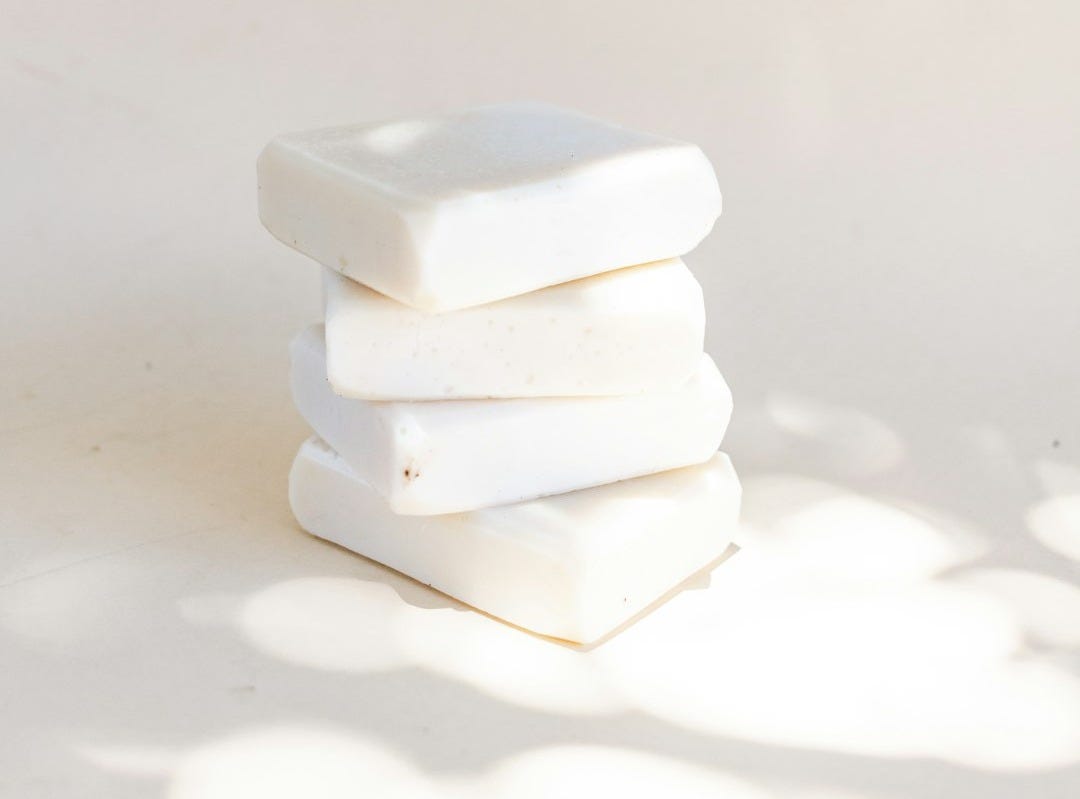
This simple change is switching from body wash or shower gel to bar soap. Easy. You can literally stop reading here if you are ready to make the change. But if you want to know why this matters, read on.
We all bathe regularly hence soap being an essential purchase we make repeatedly. These repeat purchases are a great way to really demonstrate what you want from the marketplace, and what you don’t. Your dollars express your values. While you want to wash, you also want a something that aligns with your values.
For me, to evaluate this aligning I ask myself the following:
Does this product use reasonably ‘clean’ ingredients? I need to understand production, use and end of life. I also want to know if the product contains any chemicals that are part of The Irrefutables.
Does it offer or can it offer clean, non-wasteful packaging?
Is using this product a relatively clean practice? (Is it necessary or can I live without it? Does it promote general health and well-being? Does it improve / impact my life significantly? Is it a need to have or a nice to have?) And, is there something else (another similar product for example) that is superior or is this product best-in-class?
So when we think about how all that applies to washing hands, faces, and bodies – where we have grown increasingly toward a pump solution – it’s time to assess and evaluate.
Maybe you can score a 15oz bottle of your favorite wash for under $10 bucks and you’re feeling pretty good. But, if you’re like the average person you’ll go through six of those bottles this year. That’s one single-use plastic bottle every two months. Did you know that it’s expected that the one single bottle you buy, upon disposal, can last for 450 years on this earth.
450 years.
The six bottles of body wash you or I use this year alone will last for thousands of years when humans are striving to merely live to age one hundred.
This is not clean packaging.
Honestly, I find it a strange logic that governments all around the world have allowed the mass adoption of plastic containers for products with easy alternatives.
I think it should be a crime to use plastic where it’s not absolutely essential. In the case of shower gels, something that matters so little to our daily lives yet will outlast us by centuries, it seems foolish. In this situation (and sadly so many others), plastic debris is inadvertently becoming our legacy.
I am asking you to stop and think about this. We now live in a world choking on plastic. Our generation has been called the plasticine era. We produce more than 430 million tons of plastic annually, and the numbers keep rising. Each of us should curb whatever plastic use we can. Which means that soap container you toss in the recycling bin, it’s hard to justify.
Currently the US is the largest consumer of these bath and shower products and the market is expected to be $19.6 billion this year (and it’s still growing.)
In 2020 it was estimated that 250 million people in the US were using body wash. That translates to 1.5 billion single-use plastics containers being disposed of annually.
Turns out that simple squeeze costs us so much more than we think. The answer to the ‘clean’ packaging metric is clearly a no.
Yet there are some very big companies getting rich on the proliferation of body wash, who want you not to stop and think about this. Given that value, you’d think the product must be superior to soap.
But when you do a straight-up ingredient comparison most body washes are highly synthetic, contain harsh and/or harmful preservatives, surfactants and fragrance. That is a stew of unnecessary chemical exposures. Even the FDA recommends soap over synthetics containing antibacterial chemicals.
Because, news flash: soap is the most effective cleaner. And by soap I want you to think: Bar Soap.
I know, you may be thinking that long ago when you used bar soap it was irritating and harsh. That was once true. But while you’ve been a convert to the gel format, bar soaps have been refreshed. They can be reliable cleaners and offer a luxurious feel.
A bit more about soap which, according to the FDA definition, is different from a cosmetic or a drug, has fairly simple ingredients. If it contains “fragrance” or “parfum” it is likely a cosmetic not a soap. Check the wording on your products carefully. Take the popular Dove brand, for example. Not soap. It’s marketed as a “beauty bar” and it’s made largely of synthetic ingredients which some consumers don’t feel actually cleans their skin.
When evaluating soap ingredients, even ones made from a reaction with lye (which is never in the final soap product) you have a pretty simple product.
From the perspective of ingredients bar soaps are generally superior to their gel cousins. When evaluating the ingredients basics to avoid in bar soaps are:
Fragrance, Perfume or Parfum. MADE SAFE explains why in this post. Many people tolerate simple essential oils instead, but if that’s not you – or to be sure – just look for unscented products.
Ethoxylated ingredients which may bring carcinogenic material into your soap. These are recognizable by avoiding ingredients that end with “eth” such as sodium laureth sulfate, common in personal care and also PEG compounds such as PEG-40 Stearate :
Harsh surfactants and preservatives that may be skin irritants particularly quaternary compounds (look for the word quaternary such as quaternary-15) and avoid chemical chloride ingredients or BAKs such as benzalkonium chloride and isothiazolinone ingredients.
Avoid ‘anti-microbial’ or ‘anti-bacterial’ soap, as it is too harsh for the skin biome.
As a general rule, products with fewer ingredients are preferable.
If you can follow these ingredient pointers you will make a good choice for a bar soap, satisfying that portion of my criteria too. However the point of this post is not to take on all the issues around possible soap ingredients. The point is that if you are still using body wash or shower gel, it’s time to make the switch back to the bar. (Almost ANY bar will do.)
Most of my friends admit they never really stopped to consider the pollution problem created with these products. Still, in case you are unconvinced, I like to add that in addition to everything else, a benefit of bar soap is that it will be cheaper. I often hear the critique that ‘it’s expensive to live less toxic’. But that’s not always true. And it’s definitely not true in the case of bar soap.
Up until the 1970s pretty much everyone used bar soap. In the decades since we’ve been under an ever-increasing marketing campaign to get us to use higher-margin products that pollute our homes, our water, and our world. But we have a choice. This one is easy. Lets resist body wash together. Collectively it will add up.
If you need ideas on what to try…my personal favorite is the bar soap from Meliora, and it’s MADE SAFE certified to boot. But there are so many to choose from. Try Kiss My Face Olive Oil Fragrance Free Soap, Dr. Bronners, or Suds of Love. If you can shop locally instead, visit your Farmer’s Market and try a soap maker near you, like this one who I met in person and enjoy supporting.
At the end of this read, all I want you to do is cancel your subscribe & save for body wash, ditch that shower gel, and instead, when you next need to lather up – grab a bar of soap.
Tell me now, will you raise the bar?